Showing posts with label Beauty. Show all posts

Thursday, June 6, 2013

Chesterton on Beauty


One of the deepest and strangest of all human moods is the mood which will suddenly strike us perhaps in a garden at night, or deep in sloping meadows, the feeling that every flower and leaf has just uttered something stupendously direct and important, and that we have by a prodigy of imbecility not heard or understood it. There is a certain poetic value, and that a genuine one, in this sense of having missed the full meaning of things. There is beauty, not only in wisdom, but in this dazed and dramatic ignorance.
-- G. K. Chesterton 

Bergere by Edward Frederick Brewtnall

Tuesday, May 15, 2012

Barbara Nicolosi: Evangelization through Art


Barbara Nicolosi, Founder of Act One, Inc.
and executive director of the Galileo Studio
at Azusa Pacific University.
Barbara Nicolosi is the founder of the Christian writer and executive training program Act One, Inc. and the executive director of the Galileo Studio at Azusa Pacific University. She recently came to Franciscan University where she gave a lecture on beauty and story telling. The lecture has been posted on the Franciscan University youtube Channel and is here for your perusal. She makes many excellent points regarding the need for beautiful art for the purpose of evangelization. I hope you will watch the whole thing at some point as your daily dose of edification on beauty. But just to give you a hint of what she is talking about, I am posting a snippet of the opening of her lecture for your perusal. 

I want to start here. Once the church was the patron of the arts. I use this expression with my students at Los Angeles film studies center. I just threw off the words “patron of the arts” and one girl in the front row raised her hand and she said, “Who is that?” 
And I said, “Well what do you mean?” 
“Who is the patron of the arts?”
“Well, who do you think it is?”
And they kind of shrugged and one of the kids said, “The Bravo Channel?”
Somebody else said, “The Sun Dance Institute?”
That’s pathetic. Pathetic that we could no longer make the claim that the Church is the patron of the arts with any credibility at all. And even if we say it to ourselves in a kind of smug way, the world would laugh at us. The Catholic Church is no longer the place where people go to see work like this: the most brilliant, beautiful art that is being produced. The question is was it a good thing or a bad thing that the Church was the patron of the arts? Let me cut right to the quick: Does anybody want to say that it was a bad thing? Okay. Where are we today? Pope Benedict says the two greatest signs that the Church is true are the lives of the saints and the works of art that the people of God produce. Where are we today? How did we get here? ... This is the first page of Handel’s Messiah and this is “Our God is an Awesome God,” all evidence to the contrary."   

I think she makes some great points within her introduction, especially the point that the Church used to be the patron of the arts and it is no longer recognized as such. I am hoping and praying that I will live long enough to see the Church reclaim this status within the next hundred years. 
As you watch the video, she shows a series of slides comparing the art of yesteryear and the art of today. The comparisons are rather striking, to put it mildly. Here are some examples:


vs. 


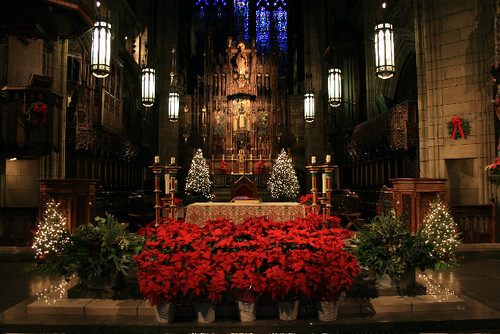
St. Eustache Church, Paris, France
vs. 
Los Angeles Cathedral, California
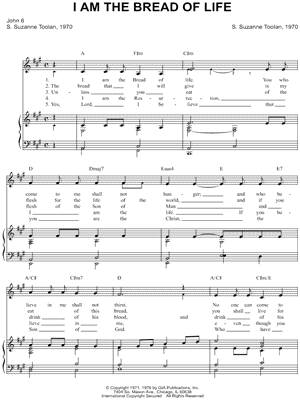
Agnus Dei from the Missa Papae Marcelli by Palestrina

vs. 
Suzanne Toolan's "I am the Bread of Life"

Nicolosi continues:

"But just look at the difference. One of the measures of beauty is complexity, that something can be beautiful and simple, but something can be more beautiful if it becomes more complex and as it grows in complexity it becomes more beautiful. So just look at the complexity. And there’s nothing wrong with simplicity. It’s perfect for the Barney Show. 
The truth is that the art made by Christians today is not only not beautiful but tends to be among the ugliest art that mankind is producing." 

She proceeds to turn to her specific field, the field of writing and story telling.

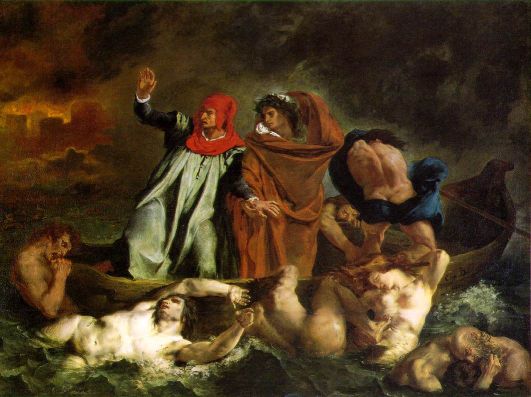
Depiction of Dante's The Divine Comedy
"What is our legacy as Catholic story tellers? The Divine Comedy, Crime and Punishment, Brideshead Revisited, The Lord of the Rings, The Man Who Was Thursday, Flannery O’Conner, Till We have Faces, etc. ... These are the kinds of stories that Catholics or Christians put out there in the literary sphere in the past. This is our legacy. Where are we today in stories? These have lasted. And in 500 years people will still be reading them." 


Nicolosi then points out several characteristics of the great books she has just listed:

1. Great books were generally written for the mainstream; they speak to everyone (on different levels). 
2. Great books have high craft in writing and storytelling. They actually show talent.
3. Great books deal with high stakes evil and sin; they are generally upsetting (i.e. Prophetic). ... Great art should strike you as if you have been awakened -- not violated, but awakened. And if you encounter art and it doesn't shake you up, then it is bad art. 
4. Great books would never be confused with propaganda.

5. Great books are not embarrassing when you are with pagans.

6. Great books are profound but often not pious.


She points out that while films like "Facing the Giants," "Courageous," and "October Baby," are well and good, they speak only to a specific audience: a Christian one. These films are not likely to reach to a broader audience which is more in need of evangelization than the Christian one. These films are catechetical, not evangelical. There is a need for great art and great stories that speak to atheists as well as Catholics. This can happen in music, art, architecture, literature, and film. There is good Catholic music out there, such as Palestrina's Missa Papae Marcelli, which moves an atheist just as much if not more so than a Christian. The Sistine Chapel is awe inspiring for both the casual tourist as well as the pious pilgrim, though in different ways. These are examples of good Catholic art reaching to a broader audience, that display the characteristics Nicolosi mentions above though in a different genre of art.


Nicolosi later qualifies what she has just said by saying that sub-par art and media may be subsidized in beginning efforts and according to cultural norms.  Beginner efforts, such as young children attempting to draw the Nativity, are important and necessary and ought to be encouraged. However, she further qualifies this statement: 

"But let me put to you another case: Supposing I, a forty-five year old woman, brought my mother a picture that looked like it had been drawn by a four year old, my mother would say, 'What the heck is this?' and not put it on the refrigerator. And I think that is the situation in the Church today. If I really believed that what we are doing to ourselves in the arts in the Church was the best we could do - hey. But I don't."

I hope that you will hear Nicolosi's case, as I think she has an important message for Catholic artists of all kinds, whether you are an aspiring writer, artist, filmmaker, or musician. Peace and blessings!


Barbara Nicolosi @ FUS: "Beyond Just Beautiful Movies"


Saturday, March 3, 2012

The Purpose of Art

Below is an excerpt from a documentary titled "Why Beauty Matters," by Roger Scruton, a British writer and philosopher.  In this documentary he delves into the meaning and the purpose of art, what it meant in the past, what it means today, and how these changes have affected humanity and our culture. I hope to watch more of the documentary once midterms have ceased, but for now I shall be content with this quote, which is jam-packed with insight into the historic and modern view of art.

Detail of St. Cecilia by Stefano Maderno
"The great artists of the past were aware that human life is full of chaos and suffering. But they had a remedy for this and the name of that remedy was beauty - the beautiful work of art brings consolation in sorrow and affirmation in joy. It shows human life to be worthwhile. Many modern artists have grown weary of this sacred task. ... No longer does art have a sacred status. No longer does it raise us to a higher, moral, or spiritual plain. It is just one human gesture among others, no more meaningful than a laugh or a shout. Art once made a cult of beauty. Now we have a cult of ugliness instead. Since the world is disturbing, art should be disturbing, too. Those who look for beauty in art are just out of touch with modern realities. Sometimes the intention is to shock us, but what is shocking first time round is boring and vacuous when repeated. This makes art into an elaborate joke, though one by now that has ceased to be funny. Yet the critics go on endorsing it, afraid to say the emperor has no clothes."   -- Roger Scruton, British writer and philosopher.

Sunday, December 18, 2011

What Christians can Learn from an Atheist


Christopher Hitchens: God's Favorite Atheist?
Christopher Hitchens. Born 13 April 1949. Died 15 December 2011.  I was not familiar with this man until today, only a few days after his passing, however after reading a few articles on the man reflecting on his life and his zealous atheism, I am uncertain as to whether or not I would like him or if we would have been friends. He certainly seemed as if he was quite a likeable character even in Catholic and Christian circles. I think I would have at least held a considerable amount of respect for him.  I would also like to think I understand at least some of the reasons behind his disbelief. None of these reasons may have been decisive factors, but they certainly seemed as if they were contributors to his self-dubbed "anti-theism."  I would like to discuss two significant points that Hitchens made in a recent interview and their significance in evangelization. Hitchens was wrong about many things, but he was right on these two points. In an article titled Hitchens: God's Favorite Atheist? posted on the World Net Daily, author Art Moore describes an interview he had with Hitchens.

Noting that Christian evangelists say they are motivated by a desire to please God, I asked Hitchens – pointing to his "zeal" for his message – what motivates him.
"Well, intellectual scorn, really. Frankly," he said. "A sense of superiority, arrogance."
He quickly made it clear that he was speaking for himself.
"It's a feeling of just intense irritation that people are allowed to say that they are people of faith. They feel that by making this statement they have added to the argument," he said. "By announcing they believe something for no reason at all, without any evidence, they don't contribute to the discussion."
(Read the full article here:Christopher Hitchens: God's favorite atheist?http://www.wnd.com/?pageId=378513#ixzz1gumXwrUi.)


Christina's World, Andrew Wyeth.
This part of the interview reminded me of a point that my ethics professor, Professor Javier Carreno, made on the first day of class last spring during my studies abroad in Austria as part of the Franciscan University Austria Program. He told us about a fashion competition that took place a few years ago during which one of the judges, a homosexual, inquired as to the reason behind the traditional views on marriage held by one of the contestants who was a Christian. The contestant responded that she believed that marriage was between a man and a woman because that was what she was raised to believe. She had been taught that her whole life. The judge replied that her reasoning was stupid. When he finishing the story, I thought my ethics professor was going to uphold the bravery of the contestant for standing up for what she believed. However, my professor said that in a way the judge was right. The reason that the girl had given for her belief was stupid. It's not enough to say that you believe something because you have been taught it your whole life. This is poor reasoning, if it could be called reasoning at all. One needs to actively wrestle with their beliefs and either reject them or take them on as their own.  Christians, especially Catholics, need to take responsibility for their faith through ongoing conversion, forming themselves in their faith through philosophy and theology. Hitchens called attention to this fault in certain Christians who simply say they have faith, and think that this simple statement is good enough. Hitchens had every right to voice his irritation with such people. Catholics need to be capable of answering not only for what we believe but why we believe it.

But he said one of his "big quarrels with the Anglican church, the one in which I was baptized, is that it got rid of the King James Bible for the most part and the old hymnbook."
"They now sing and read these banal versions of [liturgy], which I used to enjoy," he said.
"I now go to an Anglican or Episcopalian ceremony, and I'm just horrified by what they've lost," he said, "what they threw away when it was unarguably a huge, aesthetic advantage."


Hitchens called attention to the need for beauty as well as truth in Catholicism. The significance of beauty in the conversion of the human person is often neglected when it comes to evangelization . . . at the expense of souls like Hitchens'. Beautiful art, beautiful music, beautiful language are what Hitchens calls "a huge aesthetic advantage." Russian author Fyodor Dostoyevsky said once, "Beauty will save the world." Pope Benedict XVI has called beauty the language of the human heart.  He says, "The encounter with the beautiful can become the wound of an arrow that strikes the heart and in this way opens our eyes so that we can see the truth more clearly." Note that Hitchens specifically mentions the language of the Anglican liturgy and the music. How we pray and what music we sing at the liturgy does in fact matter. Dr. Peter Kreeft gave voice to this in a lecture he recently gave at Franciscan University titled, "How to Win the Culture War," where he mentioned an instance in which he had accompanied a Muslim friend to Mass one day.  The Muslim said afterwards that while the beauty of the architecture had lifted his soul upwards, the language of the liturgy had left his soul horizontal and flat. In the same talk, Kreeft spoke of two separate atheists he knew who converted to Catholicism after hearing the music of Johann Sebastian Bach. For some people, it takes more than just the naked truth to draw them into the fold. It takes the harmonies of Faure's Requiem, the stirring use of shadow and light in a Caravaggio painting, the lofty spires of a cathedral. Benedict XVI calls sacred music "an audible and perceptible rendering of the truth of our faith. In listening to sacred music - suddenly we feel: it is true!" This is a principle that applies to all forms of art.  
Although the Catholic Church has always advocated the use of beautiful art as an integral part of evangelization, her support has not always been properly  represented in the liturgy or recognized by bishops, priests, and laity. Fortunately, this is beginning to change. With the arrival of the new translation, the language of the Roman Rite has improved immensely.  Through the work of our beloved Holy Father Pope Benedict XVI, organizations such as the Church Music Association of America and the sacred music programs of Franciscan University and Ave Maria University, sacred music is beginning to make a come back in the Church. These institutions and programs are helping artists and musicians to recognize the need to use their gifts for the conversion of souls. They are shown that it is not enough simply to create art. Rather, they must be taught the principles of beauty behind it so that they can create art and music containing the qualities of universality, goodness of form, and sanctity. I conclude with a passage from Bl. John Paul II's Letter to Artists


Statue of St. Paul at St. Paul's Outside the Walls Basilica, Rome.

 "Mine is an invitation to rediscover the depth of the spiritual and religious dimension which has been typical of art in its noblest forms in every age. It is with this in mind that I appeal to you, artists of the written and spoken word, of the theatre and music, of the plastic arts and the most recent technologies in the field of communication. I appeal especially to you, Christian artists: I wish to remind each of you that, beyond functional considerations, the close alliance that has always existed between the Gospel and art means that you are invited to use your creative intuition to enter into the heart of the mystery of the Incarnate God and at the same time into the mystery of man."


Hitchens may be counted among the victims of the rational and aesthetic impoverishments occurring within Christianity today, but I am praying and hoping that such times are coming to an end. 

Tuesday, August 16, 2011

The Hand of God in Beauty and Learning to Trust

" ... The evening was bathed in a wonderful silence - and there was a sudden rift in the curdled clouds westward, and a lovely, pale, pinky-green lake of sky with a new moon in it.
"Emily stood and looked up at it with clasped hands and her little black head upturned. She must go home and write down a description of it in the yellow account book, where the last thing written had been, 'Mike's Biograffy.' It would hurt her with its beauty until she wrote it down. Then she would read it to Father. She must not forget how the tips of the trees on the hill came out like fine black lace across the edge of the pinky-green sky.
"And then, for one glorious, supreme moment, came 'the flash.'
"Emily called it that, although she felt that the name didn't exactly describe it. It couldn't be described -- not even to Father, who always seemed a little puzzled by it. Emily never spoke of it to any one else.
"It had always seemed to Emily, ever since she could remember, that she was very, very near a world of wonderful beauty. Between it and herself hung only a thin curtain; she could never draw the curtain aside-- but sometimes, just for a moment, a wind fluttered it and then it was as if she caught a glimpse of the enchanting realm beyond -- only a glimpse -- and heard a note of unearthly music.
"This moment came rarely -- went swiftly, leaving her breathless with the inexpressible delight of it. She could never recall it -- never summon it -- never pretend it; but the wonder of it stayed with her for days. It never came twice with the same thing. Tonight the dark boughs against that far-off sky had given it. It had come with a high, wild note of wind in the night, with a shadow wave over a ripe field, with a greybird lighting on her window-sill in a storm, with the singing of "Holy, holy, holy" in church, with a glimpse of the kitchen fire when she had come home on a dark autumn night, with the spirit-like blue of ice palms on a twilit pane, with a felicitous new word when she was writing down a "description" of something. And always when the flash came to her Emily felt that life was a wonderful, mysterious thing of persistent beauty."   
- L.M. Montgomery, Chapter 1, Emily of New Moon.

A sunset in Assisi, March 2011
L.M. Montgomery's Emily of New Moon Trilogy is one of my favorite pieces of literature. I was smitten with the series' heroine by the first chapter when I read this passage. I found in Emily a kindred spirit in the wonder she holds towards beauty or what she calls "the flash." I don't know if this is simply an artist's quirk, or the blessing of being a seeker of beauty, but I definitely understood what she was trying to communicate in this little passage! I experienced it so many times in Europe: experiencing a Novus Ordo Mass said "ad orientum" in Latin in the Chapel of Our Lady of Czestochowa complete with Gregorian chant and Renaissance polyphony; enjoying a sunset by a castle wall in Assisi; going to Vespers at the London Oratory; visiting the Basilica of St. Cecilia in Rome. But rather than calling it "the flash," I would call it "the hand of God." To me, the flash is when the curtain between this world and the Beatific Vision is lifted just enough that we get a glimpse of what heaven might be like.
One of the more recent times when I felt this thrill of beauty was when I first listened to the third movement of Dr. Paul M. Weber's composition, "Wilt Thou Forgive." Based on John Donne's poem of the same name, the piece beautifully depicts through music the emotions of a troubled soul as it poses questions to God about whether or not God will forgive him of his sins even though he continues to fall into them. The first and second movement are plagued by dissonance and unrest. The third movement, the text of the last stanza of Donne's poem, begins dark and foreboding, imitating the chant-like melody of the first movement in the cello's opening line as the author expresses the unrest of his soul, "I have a sin of fear that when I have spun my last thread, I shall perish on the shore..." But then the piece takes on a decidedly different feeling. These dark, fearful thoughts begin to disappear when the oboe comes in, like the first golden touches of sunrise chasing the night shadows away. The tension builds until the sun bursts onto the horizon with the basses, "But swear by thyself, that at they death thy Son shall shine as He shines now and heretofor..." The soul begins to soar, caught up for a moment in a gust of beauty, and almost touchs heaven! 
However, the piece concludes on an interesting note (no pun intended). The poem ends with the words, "And having done that, Thou hast done: I fear no more." This can be interpreted in a number of ways, depending on the reader, the speaker (if the poem is recited), or in this case, the music. It could be confident, hesitant, or doubtful. In Weber's musical interpretation of the poem, I feel there is a hint of hesitancy, like a small child placing his hand in the hand of a relative he is still learning to trust. There is neither a perfect nor an imperfect authentic cadence to conclude the piece. Rather, the piece ends on a G major chord in a plagal cadence after a series of suspensions.  The speaker has asked God to swear by Himself to save his soul, but he doesn't know that his soul is saved. The salvation of his soul depends on his choice, not God's. And the choice to save one's soul is a constant battle within the human self to forsake our will for the will of God.  God is merciful and forgiving, but we have to make the decision to turn back from our sinful ways and take up our cross. We have to remember that God the Father, like the father in the parable of the Prodigal Son, will come running the rest of the way to embrace us, and He will sustain us throughout our trials. "My yoke is easy and my burden light." In the words of Fulton Sheen, "The whole cross is easier to carry than a part." Perhaps this is what is being said through the final chords of this movement. We, the small children, have so many times dropped our heavenly Father's hand for some fleeting earthly pleasure. Realizing our error, we have come running back to His mercy in the sacrament of confession. Now we must take our heavenly Father's hand once again and let Him guide us, renouncing our will for His. We are still learning to trust, we haven't made it back to that major I chord yet, but we are learning. "Unless you become like a little child, you will not enter the kingdom of heaven."

(I had no idea I was going to end up on this subject when I began this post, but I'm kinda glad it came out that way. I've been wanting to gush about this piece for a while. I hope you won't be bored by the nerdy commentary. But definitely give the thrid movement a listen; it's a stunningly beautiful piece! Please... pretty please.... with a cherry on top?)

Monday, June 6, 2011

The Church Needs Beauty

These are a few passages from a great article I read off of The New Liturgical Movement blog. This is a fantastic blog - despite the rather misleading title - faithful to the Magisterium and working for the return of beauty and sacredness to the Catholic liturgy all over the world in all its forms. In this article the need for beautiful art and music in the Church is discussed, the need for dialogue, and a return to true art in rejection of the erotic ideas put forward by the modern movement in art. The article begins with an article by Sandro Magister titled, "Only Beauty Will Save Us."


Detail from Michelangelo's The Last Judgement
"What would be learned by the millions of faithful who visit the Sistine Chapel if its noble walls and its famous vault had been painted, not by Michelangelo, but by a Haring, a Warhol, a Bacon, a Viola, a Picasso?"

Radaelli's new book is entitled "La bellezza che ci salva [
The beauty that saves us]." And its subtitle is a whole program in itself: "The power of 'Imago', the second Name of the Only-Begotten of God, which, with 'Logos', can give life to a new civilization, founded on beauty."

It is three hundred pages of metaphysics and theology, enhanced with a preface by the philosopher of "common sense" Antonio Livi, a priest of Opus Dei and professor at the Pontifical Lateran University.

But they are also pages of blistering criticism of the tendency that has overthrown a fruitful, centuries-long relationship between Christian art and faith. Without sparing the hierarchs of the Church, whom
Radaelli accuses of abdicating their magisterial role as beacons of the faith, and therefore of Christian art as well.

Radaelli writes that in order to turn back the tide,
it is not enough to have a few sporadic encounters between the pope and artists. In his view, it is necessary to convene in the Church "a universal debate, not merely artistic, but theological, liturgical, ecclesiological, philosophical, a multi-year and multidisciplinary symposium, the name of which could be the simple but clear 'Coalition for beauty'."


... The article continues with a passage from French author and world-famous art historian Jean Clair. Jean Clair gives a few examples of avant-garde "art" that has been installed in various Catholic Churches in France, then goes on to give his opinion. I was the most fascinated by his comments. This section leads back to the first passage concerning what would people learn if someone like Picasso, a member of the "avant-garde" mentioned below, had painted the Sistine Chapel as opposed to Michelangelo, and the ideas that motivated the former as opposed to those that inspired the latter. The Frenchman says:


I am not a theologian, but as an historian of forms I am struck, in these cultural works called "avant-garde" that today presume to bring into the churches the joy of suffering and evil – whereas traditional worship once used to combat these with its liturgy – of the obsessive presence of bodily humors, privileging sperm, blood, sweat, or putrefaction, the pus in the frequent evocations of AIDS.


The Church has allowed itself to become fascinated by the avant-garde to the point of presuming that the unclean and the abominable presented to the view by its artists are the best doors of access to the truth of the Gospel. In the meantime, various stages have been marked which I do not dare to call a trend.


... Unlike the Orthodox who kneel and pray before icons, even when they are still found in museums, it is rare, in the grand gallery of the Louvre, to see a believer stop and pray in front of a Christ on the cross or in front of a Madonna. Should we regret this? Sometimes I think so. ....


The Catholic religion has long seemed to me the most respectful of the senses, the most attentive to the forms and smells of the world. It is in it that one also encounters the most profound and the most compelling and surprising tenderness. Catholicism seems to me above all a religion not of detachment, nor of conquest, nor of a jealous God, but a religion of tenderness.


....In the work of art born from Christianity, there is also something else, with respect to visual harmony and piety. There is also an heuristic approach to the world. [...] The artist is at the service of God, not of men, and if he depicts the creation, he knows the wonders of creation, he preserves in his spirit the fact that these creatures are not God, but the testimony of the goodness of God, and that they are praise and a song of joy. I wonder where this joy can still be felt, the joy that is heard in Bach or in Handel, in these cultural manifestations so poor and so offensive to the ear and to the eye, to which the churches now open their worship.

Without a doubt, this has been and remains today the greatness of the Church: it was born from the contemplation and adoration of a child who is born, and fortifies itself with the vision of a man who rises again. Between these two moments, the Nativity and Easter, it has not ceased to fight against the "culture of death," as it so rightly calls it.

This courage, this persistence make even more incomprehensible its temptation to defend works that, in my eyes, to the "doors of my flesh," smack only of death and despair.

God without Beauty is more incomprehensible than Beauty without God.

The article concludes with a passage from the author Inos Biffi's "When One Breathes the Breath of Beauty," of which I have included a few sections, partly because they too are wonderful, and also because they have to do with music. I love his comment on musical cathedrals!

By definition, theology "says God." And this "saying" the truth of God has a beauty of its own. [...] This was the conviction of Saint Augustine, who spoke of the "splendor of truth," and was repeatedly echoed by Thomas Aquinas, [...] attributing the prerogative to be "splendor and beauty" to the Word, who in the mystery of his transfiguration and ascension has effused and poured it out in his own glorious humanity, the inexhaustible end of the contemplation of the blessed.

... In this line of aesthetics, we could also recall how "enchanting" the mystery has been made and still is made by sacred music, liturgical and non-liturgical, which begins with the mystery itself, presenting and providing a taste of it in the form of song and melody. The musical repertoires of the Church, an immense patrimony of Masses, oratories, motets, are in turn musical cathedrals. [...]"

Thursday, January 6, 2011

O Magnum Mysterium - The Living Tradition of Sacred Music

This is a beautiful, beautiful motet for the Christmas season. We mustn't forget that although shepherds and wise men came to adore Christ the Lord, the animals of the stable were there with the Holy Family before either came to worship the Great Savior. The text itself is taken from Matins for Christmas Day, although apparently the motet is commonly sung at Midnight Mass. Here is the translation:

O most awesome mystery
and sacrament divine and most wondrous:
that animals should look and see the Lord a babe newborn
beside them in a manger laid.
O how truly blessed is the Virgin whose womb was worthy
to bear and bring forth the Lord Christ Jesus.
Alleluia! 

Many settings of this text have been composed over the centuries. The settings of William Byrd and Palestrina, two great Catholic composers of the Renaissance Period, are rather popular, but two of my favorite settings are those by the Spanish Renaissance composer, Tomas Luis de Victoria, and the still living American composer, Morten Lauridsen. 

Morten Lauridsen : O Magnum Mysterium sung by the Westminster Cathedral Choir at the Midnight Mass for Christmas 2009

I've found among the Renaissance composers Victoria is one of my favorites because of his clear,  even cadences as opposed to hiding them amidst the other voices. Morten Lauridsen I have yet to explore a lot of his music, but I really like the ethereal quality of his piece. It's very "floaty." I look forward to being able to study this type of music and compare and contrast these modern Catholic liturgical music with the old. 
I find it fascinating though that texts as old as these are still being set by composers to new musical compositions. These texts don't belong to the past. They are very much alive in the Church. Not only that, but new compositions of this text can be written that are just as beautiful as those of the Renaissance, even though the style is very different. 
Similarly, sacred music doesn't just consist of the music of the past, but is also welcoming of new compositions that contain the three criteria described in Pope Pius X's motu proprio, Tra le Sollecitudini: sanctity, goodness of form, and universality.  The works of both composers, Victoria and Lauridsen, exemplify these qualities even though they were composed hundreds of years apart. Sacred Music is not a dead or lifeless object in a museum. Rather, it is very much alive, with new compositions composed, sung, and appreciated alongside the old : a living tradition not unlike the Catholic liturgy it is meant for. I'm just beginning to discover these modern composers and the beautiful works they have created, so perhaps there will be more brought here as the new year progresses. I wish you all a blessed new year filled with beauty and truth!

Friday, December 31, 2010

The True Artist

I recently stumbled on a blog by Deacon Daniel Varholy, the president of the website Corpus Christi Watershed, and I am very much liking what he has to say. He is very sympathetic towards the heart of the artist - a kindred spirit, I suppose - and has some beautiful advice for us to keep in mind as we work, especially when we become discouraged by the ugliness of the world.


"True artists by nature are sensitive to beauty, and they seek to do something beautiful for the Lord as an offering to try to give answer to the problems of pain and sin that mar the beauty of creation. It is heartbreaking to witness pain and ugliness if we do not see with them a sense of redemption and hope. Yet it is precisely out of this cry of heartbreak that the Lord hears our prayers: 'The Lord hears the cry of the poor. | The Lord is close to the brokenhearted; | And those who are crushed in spirit he saves' (Ps 33: 19). "


To read the rest of Deacon Varholy's blog post, please click on the link below: 
http://ccwatershed.org/blog/2010/dec/14/et-confractos-spiritu-salvabit/

Sunday, December 12, 2010

Beata - A Song from Heaven

God reveals himself through music in so many ways, from the magnificence of Mozart's Requiem or a Bach Cantata to the still, soothing melodies of chant. I'm just beginning to discover what a vast treasury of beautiful music the Church holds, especially for the season of Advent. 
Take, for example, the Gregorian chant Beata Viscera Mariae Virginis, so appropriate for the coming of the Lord on Christmas (read the Latin, then see the translation below). This particular chant, when sung by the skilled voices of the a capella choir, Chanticleer, is a gem among gems. This is, undoubtedly, one of the most beautiful things I have ever heard and will ever hear this side of eternity. Please take the time to listen to the link that I have posted below: to be still, and to know that He is God.

http://www.youtube.com/watch?v=TNAtLo5-ZSM

Chanticleer, Beata (Plainsong).
Can be found on the album Chanticleer: Sound in Spirit released 2005.


Text:


Beata viscera Mariae Virginis,
quae portaverunt aeterni Patris filium.


Translation:


Blessed is the womb of the Virgin Mary
that bore the Son of the everlasting Father.

Tuesday, September 21, 2010

The Beauty That Wounds & Heals


"The Beauty That Wounds & Heals" By Fr. Gabriel Gillen, O.P.
The Dominican Province of St. Joseph

When you walk in, you look up. In the afternoon, the stunning gothic nave is suffused with soft blue-and-red light from the magnificent stained-glass windows. Your eye is attracted - intrigued - by the intricate gothic stonework, the images in the windows, and the rich details of the rood, the high pulpit and the side altars. The noise of the city recedes, and for a moment you might think you have stepped into a small French gothic cathedral. Irresistibly, your eye is drawn toward the sanctuary, to its splendid marble high altar and the impressive reredos behind it. Before it hang seven oil lamps, burning in vigil before the Presence in the golden tabernacle. I'm told that Grace Kelly called this church - St. Vincent Ferrer - the best place to pray in New York City. I concur.

This week I've been visiting St. Vincent's, and I've been watching how people behave when they walk in. Yesterday afternoon, I saw a representative of almost every social class in New York: the upper East Side matron, tastefully (and expensively) attired, kneels and lights a candle; a waitress on her way to work prays on the sanctuary steps; a middle-aged man, bowing his bald head, prays before the Blessed Sacrament. In walks a young couple carrying backpack and camera: tourists. Clearly, they are not used to being in a church, but what happens next is fascinating. Their voices fall to a whisper, and their bold tourist-with-a-guidebook posture is transformed into the humble stance of pilgrims entering a holy place. The man folds his hands. The woman gazes upward.They are tourists no more.

"It's hard to reach some young people these days," a priest friend of mine said recently. "But I think the key is beauty. If you're trying to evangelize them, beauty does a lot of the work for you."

Pope Benedict XVI would agree. He has written eloquently on the connection between the truth of the faith and beauty, and the pressing need to restore beauty to the center of the Christian experience. "Today we are experiencing, not just a crisis of sacred art, but a crisis of art in general of unprecedented proportions," he wrote as Cardinal Ratzinger, in his book The Spirit of the Liturgy. We are losing the deepest dimension of the experience of true beauty - that beauty is more than something pretty or pleasing, it is not merely glamorous or an aesthetic experience; rather, it can draw us out of ourselves and give us a glimpse of the True; it makes us long for it and love it, even though we do not fully understand it.

Imagine the young couple I saw in church this week as they enter a typical museum. They would quickly acquire the audio guide, or they would stand mesmerized in front of an interactive computer display. Blinded in a blizzard of didactic instruction, they might well miss the real beauty before them.

Entering St. Vincent's, or any really beautiful church, is a very different experience (or, at least, it ought to be). A living gothic church is a place of mystery. Its art is pleasing, and it certainly aims to teach with its images - indeed, to communicate saving truths - but it is not simply didactic. It gives knowledge not through words, but by drawing us into contemplation of the mysteries of the faith. It seeks to bring us into contact with those very realities, through the experience of beauty. And encountering these deep realities with longing is an excellent beginning of prayer.

Why is it that beauty evokes in us a longing, a nostalgia - even a kind of pain?

Cardinal Ratzinger wrote: "Through the appearance of the beautiful we are wounded in our innermost being, and that wound grips us and takes us beyond ourselves; it stirs longing into flight and moves us towards the truly Beautiful, to the Good in itself."

Truly beautiful art, though experienced through our senses, can open our inner eyes to a vastly more beautiful realm. The most beautiful things cannot be seen, touched, or heard: they are the beauty of truth, the beauty of love, the beauty of the kindness and joy of the saints (think of the gentle smile of Mother Teresa) - and ultimately, the beauty of our God who so loved the world that He gave His only Son for our sake.

The face of Christ must have been the most beautiful face that ever existed, as the Gospels suggest. Looking into that face, the Apostles walked away from their homes and their livelihoods to follow Him. With a glimpse of that face, crowds followed Him and sought to touch Him. Moved by the love of that face, the sinful woman bathed His feet with tears of repentance and dried them with her hair.

High above the nave of St. Vincent's, where it joins the sanctuary, there is an ornate wooden cross. From it, the face of Christ looks down on His people. We gaze upon that face which still attracts us though it is beaten, crowned with thorns, spat upon, and reviled - for our sake. In that beautiful face - the face of Truth itself - is our salvation. As Psalm 80 says: "Let your face shine upon us and we shall be saved."

"We must learn to see Him," wrote Cardinal Ratzinger. "If we know Him, not only in words, but if we are struck by the arrow of His paradoxical beauty, then we will truly know Him, and know Him not only because we have heard others speak about Him. Then we will have found the beauty of Truth, of the Truth that redeems. Nothing can bring us into close contact with the beauty of Christ Himself other than the world of beauty created by faith and light that shines out from the faces of the saints, through whom His own light becomes visible."

Amen.

Tuesday, September 14, 2010

Preaching The Beautiful

A preacher is someone whose life is dedicated to sharing and proclaiming the truth - the truth that is Jesus Christ. While the truth speaks very powerfully to the mind, the heart must also be addressed. Pope Benedict has pointed out that beauty is the language native to the human heart. He once said: "The encounter with the beautiful can become the wound of an arrow that strikes the heart and in this way opens our eyes so that we can see the truth more clearly." The Holy Father insists that truth and beauty belong together and that they must be presented together. He does so because he knows how much man needs both truth and beauty in order to appreciate and live the fullness of the Christian life. God is not only true; He is also good and beautiful.

Beauty serves the sacred liturgy by expressing the honor and glory due to the Triune God we worship, as well as by appealing to our own hearts and convincing us of the Truth that we encounter in the sacred liturgy. Pope Benedict writes, "I think that the great music born within the Church is an audible and perceptible rendering of the truth of our faith. In listening to sacred music - suddenly we feel: it is true!" The preacher, in his mission to communicate the truth of the Gospel, finds an indispensible ally in the power of beauty to move human hearts to embrace the fullness of the truth. As the Holy Father once exclaimed upon hearing a piece of sacred music: "Anyone who has heard this knows that the faith is true!"


A passage from the Article "Preaching The Beautiful," An Interview with Brother Michael O'Connor, O.P.