Pages

Showing posts with label Art. Show all posts

Saturday, October 17, 2015

I See Dead People

When I was studying abroad in Austria, a couple of my friends and I got together one night to watch the 1999 Night Shyamalan film The Sixth Sense. The film tells the story of a successful child psychiatrist named Malcolm Crowe who takes on the task of helping a traumatized little boy named Cole who appears to be plagued by visions of ghosts. However, as Malcolm's relationship with the boy develops, he realizes that the boy's fantasies are far more disturbing than he imagined.

It is a highly suspenseful and rather gritty film, and one of the key moments in the story goes like this: (SPOILER ALERT)

Cole: "I see dead people."
Malcolm: "In your dreams?"
[Cole shakes his head no]
Malcolm: "While you're awake?"
[Cole nods]
Malcolm: "Dead people like, in graves? In coffins?"
Cole: "Walking around like regular people. They don't see each other. They only see what they want to see. They don't know they're dead."
Malcolm: "How often do you see them?"
Cole: "All the time. They're everywhere."

Later on, a theology professor at my undergraduate school used this scene to help us come to grips with the reality of those who live without the sacraments -- that is, without the life of grace -- either through ignorance, or worse, neglect and/or mortal sin. Whether they know it or not, these people have killed the spiritual life within them and they have become, in a manner of speaking, walking dead people. What's worse is that, more often than not, "They don't know that they're dead."

Problem: Dead people who don't realize that they're dead.

Solution? First of all, how do you make them realize they're dead? Secondly, how do you awaken them, or more accurately, how do you resurrect them? The second question is not so complicated, as that is the purpose of the sacraments of Penance and Anointing of the Sick -- sacraments of healing. But first you must make them realize they are dead. You have to move them to want to awaken.

Let's turn to another rather disturbing story, Flannery O'Connor's A Good Man is Hard to Find. The story follows an unfortunate encounter between a family and a band of criminals who are lead by a man known as the Misfit. The main character is a grandmother, a self-proclaimed "lady" who appears to be a religious woman. As the story progresses it becomes apparent that she is not only weak but deeply flawed. However, towards the end of the story, the Misfit experiences a moment of vulnerability and, moved with compassion, the grandmother suddenly cries, "Why you're one of my babies. You're one of my own children!"  Although she is being held at gunpoint, she foregoes the moral high ground she's staunchly kept and embraces her and the Misfit’s common humanity. The Misfit later realizes her change of heart and observes, "She would have been a good woman if it had been somebody there to shoot her every minute of her life." He recognizes that it is in facing death that the grandmother realizes her capacity to be a good woman. If she had lived her whole life at gunpoint, the grandmother might have gained the self-awareness and compassion which she lacked.

In other words, the grandmother was spiritually dead without knowing it until she witnessed the Misfit's moment of vulnerability and she was awakened by recognition of the beauty of the human person.

Beauty. (You knew it was going to be my favorite B-word). Beauty has the capacity to awaken the dead. I'm sure most of us have experienced this at least once in our lives: an unexpected moment in which your breath is taken away by something like the view of the White Mountains of New Hampshire, the lush colors of a forest in autumn, walking into a gothic cathedral, holding a baby in your arms, witnessing/receiving an act of kindness. It's a feeling of awe, yearning, vulnerability, as if one has been the recipient of an immense unexpected gift. It's a feeling that inspires one person to say, "I have to ask her to marry me," and another person to say, "I have to beg your forgiveness."

Sunrise over the Alps in Gaming, Austria.
Now we know of plenty of amazing vistas around the world through which the Creator's unmediated voice speaks to us: Niagara Falls, the Alps, the Cliffs of Moher, autumn in Vermont, the Grand Tetons, etc. However, there are plenty of us (myself included) who don't live next door to these natural wonders. How can we give them this sense of the beautiful?

Art. (On to my second favorite, the A-word...) As people become less connected to the unmediated Creator (a.k.a. natural wonders which present the majesty and beauty of the Creator without us having to do anything except stand there and experience it), they are going to need to encounter art that gives them the sense of the beautiful.

We need art that awakens -- not violates, but awakens.

We need art that shoots people every day of their life.
And it is our responsibility as believers to create this kind of art.

But that begs the question, how is this kind of art created? What makes art so beautiful that, as Rainer Maria Rilke writes in her poem Archaic Torso of Apollo, it compels them to change their life?

Most of the smart guys (Aquinas, Plato, Aristotle, Augustine to name a few) seemed to agree that beauty consists of three things: wholeness + harmony + radiance (and you don't have to take my word for it).

These three factors automatically cancel out qualities such as cute, pretty, facile, puerile, and banal. In other words, if it's easy/cheap, it's not beautiful.  Beauty takes effort, blood, sweat,  tears, money, and generous benefactors. Artists pour themselves into their work and they deserve to be paid for what they create.

If art has an agenda -- political, egalitarian or other -- it's not beautiful. Beauty does not bash people over the head. It simply presents the truth in the hope that people's hearts will respond. Exhibit A, B, C:
Altarpiece of Veit Stoss, St. Mary's Basilica, Krakow, Poland.
An Easter Liturgy at St. Mary's Catholic Church in Remsen, Iowa

"Like Great Drops of Blood" by Mary Sullivan
I see dead people... and it's time we helped them wake up.

Saturday, May 19, 2012

Neil Gaiman: Make Good Art

I am posting the commencement address given by English author Neil Gaiman at the University of the Arts on 17 May 2012. His address is directed specifically to artists of all sorts, from dancers to musicians to writers. I confess I have never actually read any of his books, and the movie based on his book titled Coraline looked a little creepy.  His photos on the internet are all rather odd or sinister looking, which was surprising to me because he has a pleasant demeanor and a cute smile if you watch live footage of the address here. So I tried to find a photo where he was at least smiling a little. I'm told that he loves Tolkien, Chesterton, and C.S. Lewis but his views on religion and morals are rather screwy. But in my experience good advice comes from all sorts of places and backgrounds, and I plan to remember this address for as long as I live.


134th Commencement
University of the Arts
May 17, 2012
Neil Gaiman is an English author of short fiction,
novels, comic books, graphic novels, audio theatre,
and films. His notable works include the comic book
series The Sandman and novels Stardust,
American Gods, Coraline, and The Graveyard Book. 

I never really expected to find myself giving advice to people graduating from an establishment of higher education.  I never graduated from any such establishment. I never even started at one. I escaped from school as soon as I could, when the prospect of four more years of enforced learning before I'd become the writer I wanted to be was stifling.
I got out into the world, I wrote, and I became a better writer the more I wrote, and I wrote some more, and nobody ever seemed to mind that I was making it up as I went along, they just read what I wrote and they paid for it, or they didn't, and often they commissioned me to write something else for them.
Which has left me with a healthy respect and fondness for higher education that those of my friends and family, who attended Universities, were cured of long ago.
Looking back, I've had a remarkable ride. I'm not sure I can call it a career, because a career implies that I had some kind of career plan, and I never did. The nearest thing I had was a list I made when I was 15 of everything I wanted to do: to write an adult novel, a children's book, a comic, a movie, record an audiobook, write an episode of Doctor Who... and so on. I didn't have a career. I just did the next thing on the list.
So I thought I'd tell you everything I wish I'd known starting out, and a few things that, looking back on it, I suppose that I did know. And that I would also give you the best piece of advice I'd ever got, which I completely failed to follow.

First of all: When you start out on a career in the arts you have no idea what you are doing.
This is great. People who know what they are doing know the rules, and know what is possible and impossible. You do not. And you should not. The rules on what is possible and impossible in the arts were made by people who had not tested the bounds of the possible by going beyond them. And you can.
If you don't know it's impossible it's easier to do. And because nobody's done it before, they haven't made up rules to stop anyone doing that again, yet.

Secondly, If you have an idea of what you want to make, what you were put here to do, then just go and do that.
And that's much harder than it sounds and, sometimes in the end, so much easier than you might imagine. Because normally, there are things you have to do before you can get to the place you want to be. I wanted to write comics and novels and stories and films, so I became a journalist, because journalists are allowed to ask questions, and to simply go and find out how the world works, and besides, to do those things I needed to write and to write well, and I was being paid to learn how to write economically,  crisply, sometimes under adverse conditions, and on time.
Sometimes the way to do what you hope to do will be clear cut, and sometimes  it will be almost impossible to decide whether or not you are doing the correct thing, because you'll have to balance your goals and hopes with feeding yourself, paying debts, finding work, settling for what you can get.
Something that worked for me was imagining that where I wanted to be – an author, primarily of fiction, making good books, making good comics and supporting myself through my words – was a mountain. A distant mountain. My goal.
And I knew that as long as I kept walking towards the mountain I would be all right. And when I truly was not sure what to do, I could stop, and think about whether it was taking me towards or away from the mountain. I said no to editorial jobs on magazines, proper jobs that would have paid proper money because I knew that, attractive though they were, for me they would have been walking away from the mountain. And if those job offers had come along earlier I might have taken them, because they still would have been closer to the mountain than I was at the time.
I learned to write by writing. I tended to do anything as long as it felt like an adventure, and to stop when it felt like work, which meant that life did not feel like work.

Thirdly, When you start off, you have to deal with the problems of failure. You need to be thickskinned, to learn that not every project will survive. A freelance life, a life in the arts, is sometimes like putting messages in bottles, on a desert island, and hoping that someone will find one of your bottles and open it and read it, and put something in a bottle that will wash its way back to you: appreciation, or a commission, or money, or love. And you have to accept that you may put out a hundred things for every bottle that winds up coming back.
The problems of failure are problems of discouragement, of hopelessness, of hunger. You want everything to happen and you want it now, and things go wrong. My first book – a piece of journalism I had done for the money, and which had already bought me an electric typewriter  from the advance – should have been a bestseller. It should have paid me a lot of money. If the publisher hadn't gone into involuntary liquidation between the first print run selling out and the second printing, and before any royalties could be paid, it would have done.
And I shrugged, and I still had my electric typewriter and enough money to pay the rent for a couple of months, and I decided that I would do my best in future not to write books just for the money. If you didn't get the money, then you didn't have anything. If I did work I was proud of, and I didn't get the money, at least I'd have the work.
Every now and again, I forget that rule, and whenever I do, the universe kicks me hard and reminds me. I don't know that it's an issue for anybody but me, but it's true that nothing I did where the only reason for doing it was the money was ever worth it, except as bitter experience. Usually I didn't wind up getting the money, either.  The things I did because I was excited, and wanted to see them exist in reality have never let me down, and I've never regretted the time I spent on any of them.
The problems of failure are hard.
The problems of success can be harder, because nobody warns you about them.
The first problem of any kind of even limited success is the unshakable conviction that you are getting away with something, and that any moment now they will discover you. It's Imposter Syndrome, something my wife Amanda christened the Fraud Police.
In my case, I was convinced that there would be a knock on the door, and a man with a clipboard (I don't know why he carried a clipboard, in my head, but he did) would be there, to tell me it was all over, and they had caught up with me, and now I would have to go and get a real job, one that didn't consist of making things up and writing them down, and reading books I wanted to read. And then I would go away quietly and get the kind of job where you don't have to make things up any more.
The problems of success. They're real, and with luck you'll experience them. The point where you stop saying yes to everything, because now the bottles you threw in the ocean are all coming back, and have to learn to say no.
I watched my peers, and my friends, and the ones who were older than me and watch how miserable some of them were: I'd listen to them telling me that they couldn't envisage a world where they did what they had always wanted to do any more, because now they had to earn a certain amount every month just to keep where they were. They couldn't go and do the things that mattered, and that they had really wanted to do; and that seemed as a big a tragedy as any problem of failure.
And after that, the biggest problem of success is that the world conspires to stop you doing the thing that you do, because you are successful. There was a day when I looked up and realised that I had become someone who professionally replied to email, and who wrote as a hobby.  I started answering fewer emails, and was relieved to find I was writing much more.

Fourthly, I hope you'll make mistakes. If you're making mistakes, it means you're out there doing something. And the mistakes in themselves can be useful. I once misspelled Caroline, in a letter, transposing the A and the O, and I thought, “Coraline looks like a real name...”
And remember that whatever discipline you are in, whether you are a musician or a photographer, a fine artist or a cartoonist, a writer, a dancer, a designer, whatever you do you have one thing that's unique. You have the ability to make art.
And for me, and for so many of the people I have known, that's been a lifesaver. The ultimate lifesaver. It gets you through good times and it gets you through the other ones.
Life is sometimes hard. Things go wrong, in life and in love and in business and in friendship and in health and in all the other ways that life can go wrong. And when things get tough, this is what you should do.
Make good art.
I'm serious. Husband runs off with a politician? Make good art. Leg crushed and then eaten by mutated boa constrictor? Make good art. IRS on your trail? Make good art. Cat exploded? Make good art. Somebody on the Internet thinks what you do is stupid or evil or it's all been done before? Make good art. Probably things will work out somehow, and eventually time will take the sting away, but that doesn't matter. Do what only you do best. Make good art.
Make it on the good days too.

And Fifthly, while you are at it, make your art. Do the stuff that only you can do.
The urge, starting out, is to copy. And that's not a bad thing. Most of us only find our own voices after we've sounded like a lot of other people. But the one thing that you have that nobody else has is you. Your voice, your mind, your story, your vision. So write and draw and build and play and dance and live as only you can.
The moment that you feel that, just possibly, you're walking down the street naked, exposing too much of your heart and your mind and what exists on the inside, showing too much of yourself. That's the moment you may be starting to get it right.
The things I've done that worked the best were the things I was the least certain about, the stories where I was sure they would either work, or more likely be the kinds of embarrassing failures people would gather together and talk about  until the end of time. They always had that in common: looking back at them, people explain why they were inevitable successes. While I was doing them, I had no idea.
I still don't. And where would be the fun in making something you knew was going to work?
And sometimes the things I did really didn't work. There are stories of mine that have never been reprinted. Some of them never even left the house. But I learned as much from them as I did from the things that worked.

Sixthly. I will pass on some secret freelancer knowledge. Secret knowledge is always good. And it is useful for anyone who ever plans to create art for other people, to enter a freelance world of any kind. I learned it in comics, but it applies to other fields too. And it's this:
People get hired because, somehow, they get hired. In my case I did something which these days would be easy to check, and would get me into trouble, and when I started out, in those pre-internet days, seemed like a sensible career strategy: when I was asked by editors who I'd worked for, I lied. I listed a handful of magazines that sounded likely, and I sounded confident, and I got jobs. I then made it a point of honour to have written something for each of the magazines I'd listed to get that first job, so that I hadn't actually lied, I'd just been chronologically challenged... You get work however you get work.
People keep working, in a freelance world, and more and more of today's world is freelance, because their work is good, and because they are easy to get along with, and because they deliver the work on time. And you don't even need all three. Two out of three is fine. People will tolerate how unpleasant you are if your work is good and you deliver it on time. They'll forgive the lateness of the work if it's good, and if they like you. And you don't have to be as good as the others if you're on time and it's always a pleasure to hear from you.
When I agreed to give this address, I started trying to think what the best advice I'd been given over the years was.
And it came from Stephen King twenty years ago, at the height of the success of Sandman. I was writing a comic that people loved and were taking seriously. King had liked Sandman and my novel with Terry Pratchett, Good Omens, and he saw the madness, the long signing lines, all that, and his advice was this:
This is really great. You should enjoy it.
And I didn't. Best advice I got that I ignored.Instead I worried about it. I worried about the next deadline, the next idea, the next story. There wasn't a moment for the next fourteen or fifteen years that I wasn't writing something in my head, or wondering about it. And I didn't stop and look around and go, this is really fun. I wish I'd enjoyed it more. It's been an amazing ride. But there were parts of the ride I missed, because I was too worried about things going wrong, about what came next, to enjoy the bit I was on.
That was the hardest lesson for me, I think: to let go and enjoy the ride, because the ride takes you to some remarkable and unexpected places.
And here, on this platform, today, is one of those places. (I am enjoying myself immensely.)

To all today's graduates: I wish you luck. Luck is useful. Often you will discover that the harder you work, and the more wisely you work, the luckier you get. But there is luck, and it helps.
We're in a transitional world right now, if you're in any kind of artistic field, because the nature of distribution is changing, the models by which creators got their work out into the world, and got to keep a roof over their heads and buy sandwiches while they did that, are all changing. I've talked to people at the top of the food chain in publishing, in bookselling, in all those areas, and nobody knows what the landscape will look like two years from now, let alone a decade away. The distribution channels that people had built over the last century or so are in flux for print, for visual artists, for musicians, for creative people of all kinds.
Which is, on the one hand, intimidating, and on the other, immensely liberating. The rules, the assumptions, the now-we're supposed to's of how you get your work seen, and what you do then, are breaking down. The gatekeepers are leaving their gates. You can be as creative as you need to be to get your work seen. YouTube and the web (and whatever comes after YouTube and the web) can give you more people watching than television ever did. The old rules are crumbling and nobody knows what the new rules are.
So make up your own rules.
Someone asked me recently how to do something she thought was going to be difficult, in this case recording an audio book, and I suggested she pretend that she was someone who could do it. Not pretend to do it, but pretend she was someone who could. She put up a notice to this effect on the studio wall, and she said it helped.
So be wise, because the world needs more wisdom, and if you cannot be wise, pretend to be someone who is wise, and then just behave like they would.
And now go, and make interesting mistakes, make amazing mistakes, make glorious and fantastic mistakes. Break rules. Leave the world more interesting for your being here. Make good art.

Tuesday, May 15, 2012

Barbara Nicolosi: Evangelization through Art


Barbara Nicolosi, Founder of Act One, Inc.
and executive director of the Galileo Studio
at Azusa Pacific University.
Barbara Nicolosi is the founder of the Christian writer and executive training program Act One, Inc. and the executive director of the Galileo Studio at Azusa Pacific University. She recently came to Franciscan University where she gave a lecture on beauty and story telling. The lecture has been posted on the Franciscan University youtube Channel and is here for your perusal. She makes many excellent points regarding the need for beautiful art for the purpose of evangelization. I hope you will watch the whole thing at some point as your daily dose of edification on beauty. But just to give you a hint of what she is talking about, I am posting a snippet of the opening of her lecture for your perusal. 

I want to start here. Once the church was the patron of the arts. I use this expression with my students at Los Angeles film studies center. I just threw off the words “patron of the arts” and one girl in the front row raised her hand and she said, “Who is that?” 
And I said, “Well what do you mean?” 
“Who is the patron of the arts?”
“Well, who do you think it is?”
And they kind of shrugged and one of the kids said, “The Bravo Channel?”
Somebody else said, “The Sun Dance Institute?”
That’s pathetic. Pathetic that we could no longer make the claim that the Church is the patron of the arts with any credibility at all. And even if we say it to ourselves in a kind of smug way, the world would laugh at us. The Catholic Church is no longer the place where people go to see work like this: the most brilliant, beautiful art that is being produced. The question is was it a good thing or a bad thing that the Church was the patron of the arts? Let me cut right to the quick: Does anybody want to say that it was a bad thing? Okay. Where are we today? Pope Benedict says the two greatest signs that the Church is true are the lives of the saints and the works of art that the people of God produce. Where are we today? How did we get here? ... This is the first page of Handel’s Messiah and this is “Our God is an Awesome God,” all evidence to the contrary."   

I think she makes some great points within her introduction, especially the point that the Church used to be the patron of the arts and it is no longer recognized as such. I am hoping and praying that I will live long enough to see the Church reclaim this status within the next hundred years. 
As you watch the video, she shows a series of slides comparing the art of yesteryear and the art of today. The comparisons are rather striking, to put it mildly. Here are some examples:


vs. 


St. Eustache Church, Paris, France
vs. 
Los Angeles Cathedral, California
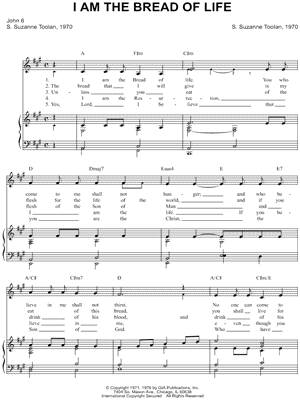
Agnus Dei from the Missa Papae Marcelli by Palestrina

vs. 
Suzanne Toolan's "I am the Bread of Life"

Nicolosi continues:

"But just look at the difference. One of the measures of beauty is complexity, that something can be beautiful and simple, but something can be more beautiful if it becomes more complex and as it grows in complexity it becomes more beautiful. So just look at the complexity. And there’s nothing wrong with simplicity. It’s perfect for the Barney Show. 
The truth is that the art made by Christians today is not only not beautiful but tends to be among the ugliest art that mankind is producing." 

She proceeds to turn to her specific field, the field of writing and story telling.

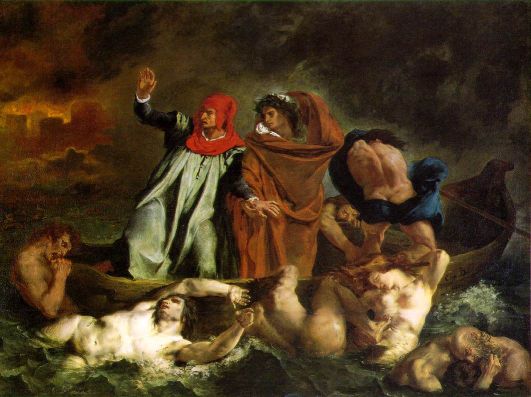
Depiction of Dante's The Divine Comedy
"What is our legacy as Catholic story tellers? The Divine Comedy, Crime and Punishment, Brideshead Revisited, The Lord of the Rings, The Man Who Was Thursday, Flannery O’Conner, Till We have Faces, etc. ... These are the kinds of stories that Catholics or Christians put out there in the literary sphere in the past. This is our legacy. Where are we today in stories? These have lasted. And in 500 years people will still be reading them." 


Nicolosi then points out several characteristics of the great books she has just listed:

1. Great books were generally written for the mainstream; they speak to everyone (on different levels). 
2. Great books have high craft in writing and storytelling. They actually show talent.
3. Great books deal with high stakes evil and sin; they are generally upsetting (i.e. Prophetic). ... Great art should strike you as if you have been awakened -- not violated, but awakened. And if you encounter art and it doesn't shake you up, then it is bad art. 
4. Great books would never be confused with propaganda.

5. Great books are not embarrassing when you are with pagans.

6. Great books are profound but often not pious.


She points out that while films like "Facing the Giants," "Courageous," and "October Baby," are well and good, they speak only to a specific audience: a Christian one. These films are not likely to reach to a broader audience which is more in need of evangelization than the Christian one. These films are catechetical, not evangelical. There is a need for great art and great stories that speak to atheists as well as Catholics. This can happen in music, art, architecture, literature, and film. There is good Catholic music out there, such as Palestrina's Missa Papae Marcelli, which moves an atheist just as much if not more so than a Christian. The Sistine Chapel is awe inspiring for both the casual tourist as well as the pious pilgrim, though in different ways. These are examples of good Catholic art reaching to a broader audience, that display the characteristics Nicolosi mentions above though in a different genre of art.


Nicolosi later qualifies what she has just said by saying that sub-par art and media may be subsidized in beginning efforts and according to cultural norms.  Beginner efforts, such as young children attempting to draw the Nativity, are important and necessary and ought to be encouraged. However, she further qualifies this statement: 

"But let me put to you another case: Supposing I, a forty-five year old woman, brought my mother a picture that looked like it had been drawn by a four year old, my mother would say, 'What the heck is this?' and not put it on the refrigerator. And I think that is the situation in the Church today. If I really believed that what we are doing to ourselves in the arts in the Church was the best we could do - hey. But I don't."

I hope that you will hear Nicolosi's case, as I think she has an important message for Catholic artists of all kinds, whether you are an aspiring writer, artist, filmmaker, or musician. Peace and blessings!


Barbara Nicolosi @ FUS: "Beyond Just Beautiful Movies"


Monday, May 7, 2012

Benedict XVI's Address to Artists, November 2009


On the anniversary of Pope Paul VI's address to artists in 1964 in which he encouraged the reunification of artists and the Church for purposes of evangelization, I am reposting this beautiful address from Pope Benedict XVI to artists given on Nov. 22, 2009 in Vatican City at the Sistine Chapel during an audience with several artists of international renown.
Dear Cardinals,
Brother Bishops and Priests,
Distinguished Artists,
Ladies and Gentlemen,
Michelangelo's The Last Judgement, the Sistine Chapel
With great joy I welcome you to this solemn place, so rich in art and in history. I cordially greet each and every one of you and I thank you for accepting my invitation. At this gathering I wish to express and renew the Church's friendship with the world of art, a friendship that has been strengthened over time; indeed Christianity from its earliest days has recognized the value of the arts and has made wise use of their varied language to express her unvarying message of salvation. This friendship must be continually promoted and supported so that it may be authentic and fruitful, adapted to different historical periods and attentive to social and cultural variations. Indeed, this is the reason for our meeting here today. I am deeply grateful to Archbishop Gianfranco Ravasi, President of the Pontifical Council for Culture and of the Pontifical Commission for the Cultural Patrimony of the Church, and likewise to his officials, for promoting and organizing this meeting, and I thank him for the words he has just addressed to me. I greet the Cardinals, the Bishops, the priests and the various distinguished personalities present. I also thank the Sistine Chapel Choir for their contribution to this gathering. Today's event is focused on you, dear and illustrious artists, from different countries, cultures and religions, some of you perhaps remote from the practice of religion, but interested nevertheless in maintaining communication with the Catholic Church, in not reducing the horizons of existence to mere material realities, to a reductive and trivializing vision. You represent the varied world of the arts and so, through you, I would like to convey to all artists my invitation to friendship, dialogue and cooperation.
Pope Paul VI committed himself to reaffirming
 the friendship between the Church
and the arts on May 7, 1964.
Some significant anniversaries occur around this time. It is ten years since the Letter to Artists by my venerable Predecessor, the Servant of God Pope John Paul II. For the first time, on the eve of the Great Jubilee of the Year 2000, the Pope, who was an artist himself, wrote a Letter to artists, combining the solemnity of a pontifical document with the friendly tone of a conversation among all who, as we read in the initial salutation, "are passionately dedicated to the search for new 'epiphanies' of beauty". Twenty-five years ago the same Pope proclaimed Blessed Fra Angelico the patron of artists, presenting him as a model of perfect harmony between faith and art. I also recall how on 7 May 1964, forty-five years ago, in this very place, an historic event took place, at the express wish of Pope Paul VI, to confirm the friendship between the Church and the arts. The words that he spoke on that occasion resound once more today under the vault of the Sistine Chapel and touch our hearts and our minds. "We need you," he said. "We need your collaboration in order to carry out our ministry, which consists, as you know, in preaching and rendering accessible and comprehensible to the minds and hearts of our people the things of the spirit, the invisible, the ineffable, the things of God himself. And in this activity ... you are masters. It is your task, your mission, and your art consists in grasping treasures from the heavenly realm of the spirit and clothing them in words, colours, forms -- making them accessible." So great was Paul VI's esteem for artists that he was moved to use daring expressions. "And if we were deprived of your assistance," he added, "our ministry would become faltering and uncertain, and a special effort would be needed, one might say, to make it artistic, even prophetic. In order to scale the heights of lyrical expression of intuitive beauty, priesthood would have to coincide with art." On that occasion Paul VI made a commitment to "re-establish the friendship between the Church and artists", and he invited artists to make a similar, shared commitment, analyzing seriously and objectively the factors that disturbed this relationship, and assuming individual responsibility, courageously and passionately, for a newer and deeper journey in mutual acquaintance and dialogue in order to arrive at an authentic "renaissance" of art in the context of a new humanism.
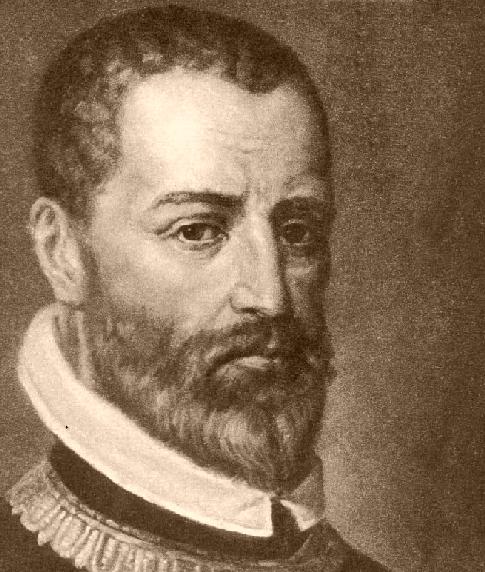
Palestrina, Italian Renaissance composer
and director of the papal choir at St. Peter's Basilica
That historic encounter, as I mentioned, took place here in this sanctuary of faith and human creativity. So it is not by chance that we come together in this place, esteemed for its architecture and its symbolism, and above all for the frescoes that make it unique, from the masterpieces of Perugino and Botticelli, Ghirlandaio and Cosimo Rosselli, Luca Signorelli and others, to the Genesis scenes and the Last Judgement of Michelangelo Buonarroti, who has given us here one of the most extraordinary creations in the entire history of art. The universal language of music has often been heard here, thanks to the genius of great musicians who have placed their art at the service of the liturgy, assisting the spirit in its ascent towards God. At the same time, the Sistine Chapel is remarkably vibrant with history, since it is the solemn and austere setting of events that mark the history of the Church and of mankind. Here as you know, the College of Cardinals elects the Pope; here it was that I myself, with trepidation but also with absolute trust in the Lord, experienced the privileged moment of my election as Successor of the Apostle Peter.
Dear friends, let us allow these frescoes to speak to us today, drawing us towards the ultimate goal of human history. The Last Judgement, which you see behind me, reminds us that human history is movement and ascent, a continuing tension towards fullness, towards human happiness, towards a horizon that always transcends the present moment even as the two coincide. Yet the dramatic scene portrayed in this fresco also places before our eyes the risk of man's definitive fall, a risk that threatens to engulf him whenever he allows himself to be led astray by the forces of evil. So the fresco issues a strong prophetic cry against evil, against every form of injustice. For believers, though, the Risen Christ is the Way, the Truth and the Life. For his faithful followers, he is the Door through which we are brought to that "face-to-face" vision of God from which limitless, full and definitive happiness flows. Thus Michelangelo presents to our gaze the Alpha and the Omega, the Beginning and the End of history, and he invites us to walk the path of life with joy, courage and hope. The dramatic beauty of Michelangelo's painting, its colours and forms, becomes a proclamation of hope, an invitation to raise our gaze to the ultimate horizon. The profound bond between beauty and hope was the essential content of the evocative Message that Paul VI addressed to artists at the conclusion of the Second Vatican Ecumenical Council on 8 December 1965: "To all of you," he proclaimed solemnly, "the Church of the Council declares through our lips: if you are friends of true art, you are our friends!" And he added: "This world in which we live needs beauty in order not to sink into despair. Beauty, like truth, brings joy to the human heart, and is that precious fruit which resists the erosion of time, which unites generations and enables them to be one in admiration. And all this through the work of your hands . . . Remember that you are the custodians of beauty in the world."
Unfortunately, the present time is marked, not only by negative elements in the social and economic sphere, but also by a weakening of hope, by a certain lack of confidence in human relationships, which gives rise to increasing signs of resignation, aggression and despair. The world in which we live runs the risk of being altered beyond recognition because of unwise human actions which, instead of cultivating its beauty, unscrupulously exploit its resources for the advantage of a few and not infrequently disfigure the marvels of nature. What is capable of restoring enthusiasm and confidence, what can encourage the human spirit to rediscover its path, to raise its eyes to the horizon, to dream of a life worthy of its vocation -- if not beauty? Dear friends, as artists you know well that the experience of beauty, beauty that is authentic, not merely transient or artificial, is by no means a supplementary or secondary factor in our search for meaning and happiness; the experience of beauty does not remove us from reality, on the contrary, it leads to a direct encounter with the daily reality of our lives, liberating it from darkness, transfiguring it, making it radiant and beautiful.
Russian novelist, Fyodor Dostoyevsky
Indeed, an essential function of genuine beauty, as emphasized by Plato, is that it gives man a healthy "shock", it draws him out of himself, wrenches him away from resignation and from being content with the humdrum -- it even makes him suffer, piercing him like a dart, but in so doing it "reawakens" him, opening afresh the eyes of his heart and mind, giving him wings, carrying him aloft. Dostoevsky's words that I am about to quote are bold and paradoxical, but they invite reflection. He says this: "Man can live without science, he can live without bread, but without beauty he could no longer live, because there would no longer be anything to do to the world. The whole secret is here, the whole of history is here." The painter Georges Braque echoes this sentiment: "Art is meant to disturb, science reassures." Beauty pulls us up short, but in so doing it reminds us of our final destiny, it sets us back on our path, fills us with new hope, gives us the courage to live to the full the unique gift of life. The quest for beauty that I am describing here is clearly not about escaping into the irrational or into mere aestheticism.
Too often, though, the beauty that is thrust upon us is illusory and deceitful, superficial and blinding, leaving the onlooker dazed; instead of bringing him out of himself and opening him up to horizons of true freedom as it draws him aloft, it imprisons him within himself and further enslaves him, depriving him of hope and joy. It is a seductive but hypocritical beauty that rekindles desire, the will to power, to possess, and to dominate others, it is a beauty which soon turns into its opposite, taking on the guise of indecency, transgression or gratuitous provocation. Authentic beauty, however, unlocks the yearning of the human heart, the profound desire to know, to love, to go towards the Other, to reach for the Beyond. If we acknowledge that beauty touches us intimately, that it wounds us, that it opens our eyes, then we rediscover the joy of seeing, of being able to grasp the profound meaning of our existence, the Mystery of which we are part; from this Mystery we can draw fullness, happiness, the passion to engage with it every day. In this regard, Pope John Paul II, in his Letter to Artists, quotes the following verse from a Polish poet, Cyprian Norwid: "Beauty is to enthuse us for work, and work is to raise us up" (no. 3). And later he adds: "In so far as it seeks the beautiful, fruit of an imagination which rises above the everyday, art is by its nature a kind of appeal to the mystery. Even when they explore the darkest depths of the soul or the most unsettling aspects of evil, the artist gives voice in a way to the universal desire for redemption" (no. 10). And in conclusion he states: "Beauty is a key to the mystery and a call to transcendence" (no. 16).
These ideas impel us to take a further step in our reflection. Beauty, whether that of the natural universe or that expressed in art, precisely because it opens up and broadens the horizons of human awareness, pointing us beyond ourselves, bringing us face to face with the abyss of Infinity, can become a path towards the transcendent, towards the ultimate Mystery, towards God. Art, in all its forms, at the point where it encounters the great questions of our existence, the fundamental themes that give life its meaning, can take on a religious quality, thereby turning into a path of profound inner reflection and spirituality. This close proximity, this harmony between the journey of faith and the artist's path is attested by countless artworks that are based upon the personalities, the stories, the symbols of that immense deposit of "figures" -- in the broad sense -- namely the Bible, the Sacred Scriptures. The great biblical narratives, themes, images and parables have inspired innumerable masterpieces in every sector of the arts, just as they have spoken to the hearts of believers in every generation through the works of craftsmanship and folk art, that are no less eloquent and evocative.
In this regard, one may speak of a via pulchritudinis, a path of beauty which is at the same time an artistic and aesthetic journey, a journey of faith, of theological enquiry. The theologian Hans Urs von Balthasar begins his great work entitled The Glory of the Lord -- a Theological Aesthetics with these telling observations: "Beauty is the word with which we shall begin. Beauty is the last word that the thinking intellect dares to speak, because it simply forms a halo, an untouchable crown around the double constellation of the true and the good and their inseparable relation to one another." He then adds: "Beauty is the disinterested one, without which the ancient world refused to understand itself, a word which both imperceptibly and yet unmistakably has bid farewell to our new world, a world of interests, leaving it to its own avarice and sadness. It is no longer loved or fostered even by religion." And he concludes: "We can be sure that whoever sneers at her name as if she were the ornament of a bourgeois past -- whether he admits it or not -- can no longer pray and soon will no longer be able to love." The way of beauty leads us, then, to grasp the Whole in the fragment, the Infinite in the finite, God in the history of humanity. Simone Weil wrote in this regard: "In all that awakens within us the pure and authentic sentiment of beauty, there, truly, is the presence of God. There is a kind of incarnation of God in the world, of which beauty is the sign. Beauty is the experimental proof that incarnation is possible. For this reason all art of the first order is, by its nature, religious." Hermann Hesse makes the point even more graphically: "Art means: revealing God in everything that exists." Echoing the words of Pope Paul VI, the Servant of God Pope John Paul II restated the Church's desire to renew dialogue and cooperation with artists: "In order to communicate the message entrusted to her by Christ, the Church needs art" (no. 12); but he immediately went on to ask: "Does art need the Church?" -- thereby inviting artists to rediscover a source of fresh and well-founded inspiration in religious experience, in Christian revelation and in the "great codex" that is the Bible.
"You are the custodians of beauty."
Dear artists, as I draw to a conclusion, I too would like to make a cordial, friendly and impassioned appeal to you, as did my Predecessor. You are the custodians of beauty: thanks to your talent, you have the opportunity to speak to the heart of humanity, to touch individual and collective sensibilities, to call forth dreams and hopes, to broaden the horizons of knowledge and of human engagement. Be grateful, then, for the gifts you have received and be fully conscious of your great responsibility to communicate beauty, to communicate in and through beauty! Through your art, you yourselves are to be heralds and witnesses of hope for humanity! And do not be afraid to approach the first and last source of beauty, to enter into dialogue with believers, with those who, like yourselves, consider that they are pilgrims in this world and in history towards infinite Beauty! Faith takes nothing away from your genius or your art: on the contrary, it exalts them and nourishes them, it encourages them to cross the threshold and to contemplate with fascination and emotion the ultimate and definitive goal, the sun that does not set, the sun that illumines this present moment and makes it beautiful.
Saint Augustine, who fell in love with beauty and sang its praises, wrote these words as he reflected on man's ultimate destiny, commenting almost ante litteram on the Judgement scene before your eyes today: "Therefore we are to see a certain vision, my brethren, that no eye has seen, nor ear heard, nor the heart of man conceived: a vision surpassing all earthly beauty, whether it be that of gold and silver, woods and fields, sea and sky, sun and moon, or stars and angels. The reason is this: it is the source of all other beauty" (In 1 Ioannis, 4:5). My wish for all of you, dear artists, is that you may carry this vision in your eyes, in your hands, and in your heart, that it may bring you joy and continue to inspire your fine works. From my heart I bless you and, like Paul VI, I greet you with a single word: arrivederci!


Saturday, May 5, 2012

The Hardship of Being a Beginner - Ira Glass

Whether you are an aspiring writer, artist, or musician, here is a piece of excellent advice from American public radio personality, Ira Glass.


Saturday, March 3, 2012

The Purpose of Art

Below is an excerpt from a documentary titled "Why Beauty Matters," by Roger Scruton, a British writer and philosopher.  In this documentary he delves into the meaning and the purpose of art, what it meant in the past, what it means today, and how these changes have affected humanity and our culture. I hope to watch more of the documentary once midterms have ceased, but for now I shall be content with this quote, which is jam-packed with insight into the historic and modern view of art.

Detail of St. Cecilia by Stefano Maderno
"The great artists of the past were aware that human life is full of chaos and suffering. But they had a remedy for this and the name of that remedy was beauty - the beautiful work of art brings consolation in sorrow and affirmation in joy. It shows human life to be worthwhile. Many modern artists have grown weary of this sacred task. ... No longer does art have a sacred status. No longer does it raise us to a higher, moral, or spiritual plain. It is just one human gesture among others, no more meaningful than a laugh or a shout. Art once made a cult of beauty. Now we have a cult of ugliness instead. Since the world is disturbing, art should be disturbing, too. Those who look for beauty in art are just out of touch with modern realities. Sometimes the intention is to shock us, but what is shocking first time round is boring and vacuous when repeated. This makes art into an elaborate joke, though one by now that has ceased to be funny. Yet the critics go on endorsing it, afraid to say the emperor has no clothes."   -- Roger Scruton, British writer and philosopher.

Friday, July 8, 2011

"The Way of Beauty" & "The Rhythm of Life"

David Clayton, St. Thomas More College of Liberal Arts
It is such a joy for me when I discover a fellow "artist" (I would say musicians also fall under that description) who has been called to serve God through beauty, has answered that call, and has risen above the challenges such a life can encounter. I recently found such a person in David Clayton, iconographer and the Artist-in-Residence and Lecturer in Liberal Arts at St. Thomas More College of Liberal Arts. Clayton's story is intriguing in that he was not originally pursuing a career as an artist. One day a friend asked him if he was happy in his work, to which he replied that he was not, or at least that he could be happier. The friend advised him to instead pursue something that he enjoyed, something to which - if he had so much money he would never have to work again -he would be happy devoting forty hours a week. You see, God wants us to be happy in our work, so long as said work is not inherently bad. He wants you to do something that you love and enjoy, that you are passionate about. Clayton realized this as well, and with his friend's guidance was able to pursue his dream to be an artist. He took risks, but not foolish ones, focusing on one step at a time. He always kept his dream at the forefront. You can read the full story here.
Matthew Kelly,
Author of The Rhythm of Life
Clayton's story and message to people in similar situations, who want to pursue a life as an artists or really any dream, is similar to the message of a book I read during my Christmas break of 2009-2010, The Rhythm of Life by Matthew Kelly.  I received this book as a gift for my high school graduation - the couple that gave it to me gives it to the high school graduates they know as an experiment to see how many of the graduates actually read it! Well, I was one of the graduates that read it - though I'll admit it took me until sophomore year of college to pick it up. But don't let that discourage you from reading it. This book changed my life! Matthew Kelly gives advice similar to that of Clayton's friend - God wants you to be happy and wants you to pursue your dream, to be who God created you to be and to do what you love to do, to thrive on what you do instead of making do with a less-than satisfactory career choice. Kelly's book gives logical steps on how to live this out through a balanced life style, caring for yourself emotionally, physically, spiritually, and intellectually. I learned how to focus on my goals, to prioritize, to pursue what I love, and to be happy and thrive vs. survive. I learned to live my dream: to serve God and people through the art of music.
A word of caution : dreams and goals don't just come to you, they must be pursued. You can wait around all you want and hope that something happens to you so that your dream is realized, but it's not that easy. Dreams and goals take sacrifice and hard work. You will be met with tough choices. The good news is that if it is something you love, then these sacrifices are worth it. And if you keep your ultimate goal at the forefront, you will be able to make your decisions accordingly. The sacrifices make the dream all the more worth it in the end - not to be cliche, but "It's not the destination it's the journey." ;-)
Bl. John Paul II, Pray for us!
The Rhythm of Life teaches you how to live a good, full life. In his Letter to Artists, Bl. John Paul II gives two definitions of artists: there are artists like Clayton who create beautiful things, but the pope also says that every person is called to be an artist in that we are all called to live a life of beauty - we are all called to become saints, to live a beautiful life for God. In short, we are all called to be artists! And Kelly shows you how to do it by helping you become what he terms "The best version of yourself." I am glad to have found someone pursuing the life of an artist in both senses of the word in David Clayton.

Check out David Clayton's website here:    http://thewayofbeauty.org.

Monday, June 27, 2011

The Ecstasy of St. Francis


Caravaggio, Francis of Assisi in Ecstasy, 1594

"Lord, make me an instrument of your peace..."


Caravaggio is without a doubt one of my favorite painters of all time. I admire the peaceful expressions on the faces of both Francis and the angel, and of course the dark-light contrast so common in Caravaggio's works. I had the blessing of visiting Assisi this past spring and fell in love with the beauty of the city, the Italian countryside, and with the Franciscan spirit. I realized how similar Dominican and Franciscan spirituality is, and how right Francis was when he told St. Dominic that the two orders needed to work together for the salvation of souls, each in their unique path to holiness. I was also awakened to the profoundness of the famous Prayer for St. Francis. This, for me, is one of those prayers that you hear so many times that it can feel redundant - when actually there is so much depth and beauty and sacrifice in those words. When you really think about what you are saying, not only is there a lot that you are praying for, but what you are praying for, "Let me not so much seek to be consoled as to console ... [Let me not so much seek] to be loved as to love ..." Those are some hard words and some tough love right there! Make no mistake: as much as St. Francis is portrayed with the animals and as this peace loving man, he was no sissy. But this is the path to sanctity. Death to self for love of God and neighbor.

Monday, June 6, 2011

The Church Needs Beauty

These are a few passages from a great article I read off of The New Liturgical Movement blog. This is a fantastic blog - despite the rather misleading title - faithful to the Magisterium and working for the return of beauty and sacredness to the Catholic liturgy all over the world in all its forms. In this article the need for beautiful art and music in the Church is discussed, the need for dialogue, and a return to true art in rejection of the erotic ideas put forward by the modern movement in art. The article begins with an article by Sandro Magister titled, "Only Beauty Will Save Us."


Detail from Michelangelo's The Last Judgement
"What would be learned by the millions of faithful who visit the Sistine Chapel if its noble walls and its famous vault had been painted, not by Michelangelo, but by a Haring, a Warhol, a Bacon, a Viola, a Picasso?"

Radaelli's new book is entitled "La bellezza che ci salva [
The beauty that saves us]." And its subtitle is a whole program in itself: "The power of 'Imago', the second Name of the Only-Begotten of God, which, with 'Logos', can give life to a new civilization, founded on beauty."

It is three hundred pages of metaphysics and theology, enhanced with a preface by the philosopher of "common sense" Antonio Livi, a priest of Opus Dei and professor at the Pontifical Lateran University.

But they are also pages of blistering criticism of the tendency that has overthrown a fruitful, centuries-long relationship between Christian art and faith. Without sparing the hierarchs of the Church, whom
Radaelli accuses of abdicating their magisterial role as beacons of the faith, and therefore of Christian art as well.

Radaelli writes that in order to turn back the tide,
it is not enough to have a few sporadic encounters between the pope and artists. In his view, it is necessary to convene in the Church "a universal debate, not merely artistic, but theological, liturgical, ecclesiological, philosophical, a multi-year and multidisciplinary symposium, the name of which could be the simple but clear 'Coalition for beauty'."


... The article continues with a passage from French author and world-famous art historian Jean Clair. Jean Clair gives a few examples of avant-garde "art" that has been installed in various Catholic Churches in France, then goes on to give his opinion. I was the most fascinated by his comments. This section leads back to the first passage concerning what would people learn if someone like Picasso, a member of the "avant-garde" mentioned below, had painted the Sistine Chapel as opposed to Michelangelo, and the ideas that motivated the former as opposed to those that inspired the latter. The Frenchman says:


I am not a theologian, but as an historian of forms I am struck, in these cultural works called "avant-garde" that today presume to bring into the churches the joy of suffering and evil – whereas traditional worship once used to combat these with its liturgy – of the obsessive presence of bodily humors, privileging sperm, blood, sweat, or putrefaction, the pus in the frequent evocations of AIDS.


The Church has allowed itself to become fascinated by the avant-garde to the point of presuming that the unclean and the abominable presented to the view by its artists are the best doors of access to the truth of the Gospel. In the meantime, various stages have been marked which I do not dare to call a trend.


... Unlike the Orthodox who kneel and pray before icons, even when they are still found in museums, it is rare, in the grand gallery of the Louvre, to see a believer stop and pray in front of a Christ on the cross or in front of a Madonna. Should we regret this? Sometimes I think so. ....


The Catholic religion has long seemed to me the most respectful of the senses, the most attentive to the forms and smells of the world. It is in it that one also encounters the most profound and the most compelling and surprising tenderness. Catholicism seems to me above all a religion not of detachment, nor of conquest, nor of a jealous God, but a religion of tenderness.


....In the work of art born from Christianity, there is also something else, with respect to visual harmony and piety. There is also an heuristic approach to the world. [...] The artist is at the service of God, not of men, and if he depicts the creation, he knows the wonders of creation, he preserves in his spirit the fact that these creatures are not God, but the testimony of the goodness of God, and that they are praise and a song of joy. I wonder where this joy can still be felt, the joy that is heard in Bach or in Handel, in these cultural manifestations so poor and so offensive to the ear and to the eye, to which the churches now open their worship.

Without a doubt, this has been and remains today the greatness of the Church: it was born from the contemplation and adoration of a child who is born, and fortifies itself with the vision of a man who rises again. Between these two moments, the Nativity and Easter, it has not ceased to fight against the "culture of death," as it so rightly calls it.

This courage, this persistence make even more incomprehensible its temptation to defend works that, in my eyes, to the "doors of my flesh," smack only of death and despair.

God without Beauty is more incomprehensible than Beauty without God.

The article concludes with a passage from the author Inos Biffi's "When One Breathes the Breath of Beauty," of which I have included a few sections, partly because they too are wonderful, and also because they have to do with music. I love his comment on musical cathedrals!

By definition, theology "says God." And this "saying" the truth of God has a beauty of its own. [...] This was the conviction of Saint Augustine, who spoke of the "splendor of truth," and was repeatedly echoed by Thomas Aquinas, [...] attributing the prerogative to be "splendor and beauty" to the Word, who in the mystery of his transfiguration and ascension has effused and poured it out in his own glorious humanity, the inexhaustible end of the contemplation of the blessed.

... In this line of aesthetics, we could also recall how "enchanting" the mystery has been made and still is made by sacred music, liturgical and non-liturgical, which begins with the mystery itself, presenting and providing a taste of it in the form of song and melody. The musical repertoires of the Church, an immense patrimony of Masses, oratories, motets, are in turn musical cathedrals. [...]"